5 Ways Your Dog Says 'I Love You' (Plus the Science of Puppy Eyes)
By BEANS Team · Published
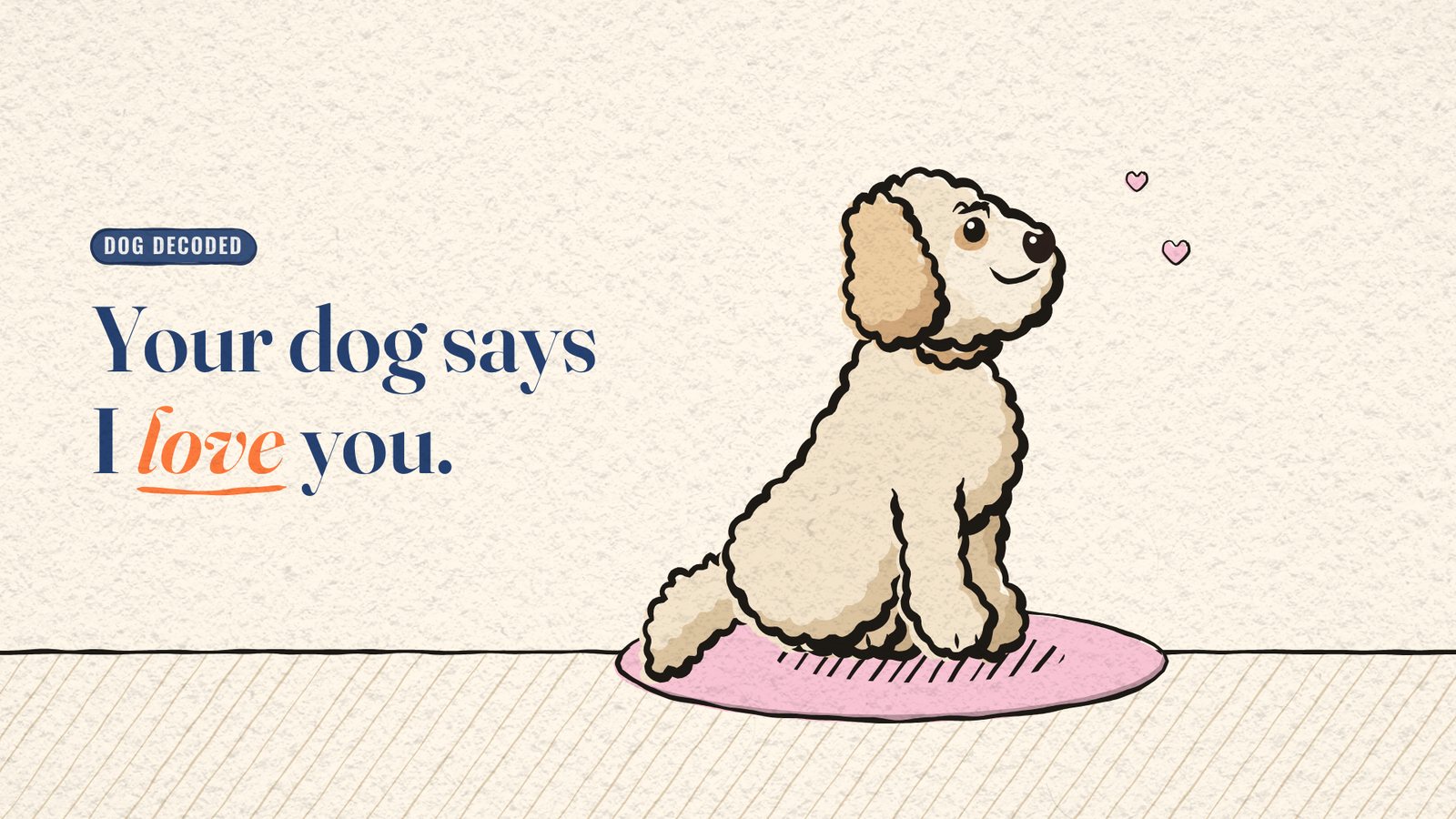
TL;DR
Dogs show love by leaning on you, following you, bringing you things, checking in on walks and lifting their inner eyebrows. A 2019 PNAS study found the muscle behind puppy eyes in dogs but not wolves, and the authors suggest humans favoured it. It is a hypothesis, not proof.
- Five signs: leaning, following, gifts, check-ins and puppy eyes
- Leaning and following are normal affection; sudden clinginess is worth a vet check
- A 2019 PNAS study found the inner-brow muscle in 6 of 6 dogs dissected but only scant fibres in wolves
- The 'evolved for us' idea is the authors' hypothesis from small samples
Dogs don't say "I love you" with words, but they say it all day long. Here are five signs, counted down from the everyday ones to the one with actual science behind it: the puppy eyes.
How does a dog show love?
A dog shows love through contact, closeness, sharing and eye contact. Five reliable signs are leaning on you, following you around, bringing you things, checking in on walks and the lifted-brow "puppy eyes" look.
Not every dog does all five, and a dog who does none of them can still be deeply attached. Think of this as a warm checklist, not a test.
Want to watch the five signs in 44 seconds?
We made a short film counting them down. The first four are everyday behaviour. The last one comes with a fun bit of research.
What are the five signs, ranked?
The five signs run from the one you see daily to the one hiding on your dog's face. Here is the quick version before the detail.
| # | Sign | What it can mean |
|---|---|---|
| 5 | They lean on you | Affection and a wish for contact, warmth and security |
| 4 | They follow you everywhere | Attachment and routine, sometimes a need for reassurance |
| 3 | They bring you their favourite thing | "I like you, let's interact" |
| 2 | They look back on walks | A check-in: "Are you still with me?" |
| 1 | Puppy eyes | A real facial muscle that lifts the inner brow |
Why does my dog lean on me?
Leaning is usually affection and a wish for contact. Dr Mary Burch, a certified applied animal behaviorist who directs the AKC's Family Dog programme, says sitting on your feet or leaning in is "one way a dog shows affection."
The AKC page adds a few other reasons: warmth in cold or damp weather, a sense of security, and attention, because leaning often earns a stroke. That last one matters. If you always respond, the habit sticks, which is fine when you like it.
All of their weight against your shins is a hug, dog style. If a dog who never leaned suddenly starts, or shows fear signs like trembling, heavy panting or a tucked tail, the AKC says to work out what is worrying them.
Why does my dog follow me everywhere, even to the bathroom?
Following is a sign of attachment, and it is usually normal. The AKC lists reasons from imprinting in puppyhood to rewards and breed traits, and notes that dogs often fixate on the person who gives them access to food, walks and play.
Yes, even there. Most bathroom shadows are just company. But the AKC also separates a Velcro dog from a dog with true separation anxiety, who panics when away from their person. Dr Jerry Klein, the AKC's chief veterinary officer, adds that a dog that suddenly becomes very clingy may have a physical ailment and should see a vet.
Why does my dog bring me their favourite toy (or my sock)?
It is usually a greeting and an invitation. PetMD says a toy can be a signal that a dog enjoys your company and wants to interact, and it can also mean "want to play with me?"
PetMD gives other reasons too: showing off a favourite toy, redirecting excitement at the door, or feeling more secure with something in their mouth. It is also why the sock appears. A sock smells like you and is easy to carry. Same energy.
If you take the sock and say thank you, you have just taught them that gifts work. That is fine, as long as the sock is not something dangerous to swallow.
Why does my dog keep looking back at me on walks?
Looking back is a check-in. The usual read is that your dog is keeping track of you and making sure you are still there.
This one is behaviour lore rather than a published study, so we won't over-claim. But it fits with everything above: dogs who are attached to you keep you in view. A dog who looks back, then carries on happily, is telling you the walk is a team effort.
For a quiet reward, a small treat when they check in teaches them that looking back is a great idea. Keep the pieces tiny.
What are puppy eyes, and did dogs really evolve them for us?
Puppy eyes are a raised inner eyebrow, and a 2019 study found the muscle behind it in dogs but not in wolves. The paper, by Juliane Kaminski and colleagues in PNAS, suggests dogs may have been selected for this expression because humans respond to it.
Here are the careful details. The researchers dissected 6 dogs and 4 wolves and found the muscle that raises the inner eyebrow, the levator anguli oculi medialis, was uniformly present in dogs. In wolves it was typically only scant muscle fibres. In a behaviour study of 27 shelter dogs and 9 wolves, the dogs made the eyebrow movement more often and more intensely.
The authors suggest the movement makes a dog's face look more infant-like and can trigger a caring response in people. They hypothesise that dogs with expressive eyebrows had a selection advantage. This is a hypothesis, and the samples were small, so "scientists think it evolved for you" is the honest way to put it.
Either way, it works. A dog that lifts those brows at you is almost always getting a treat.
Kangaroo Freeze-Dried Pet Treats (SGD $19.90): Pure kangaroo. Nothing else. A novel protein for itchy, sensitive dogs and high-value training.
A tiny piece of single-ingredient treat is an easy way to say it back. Kangaroo is a novel protein that suits dogs with common-protein sensitivities, and it is a high-value reward for training. Break it into small pieces and count it as part of the day's food.
What if my dog doesn't do any of these?
A dog who skips all five can still be deeply bonded. Breed, age, past experience and personality all change how a dog shows affection, so a quiet dog is not an unloving one.
The AKC notes that working and herding breeds are bred to stay close to people, which makes them natural shadows. It also says rescued dogs may carry a lingering fear of abandonment, which can change how and why they follow you. Some independent dogs show attachment by simply choosing to nap in the same room, or by turning up at the door when you get home.
The better question is whether your dog seems relaxed around you. Loose body, soft eyes, a wagging tail and a willingness to settle near you matter more than any single behaviour. If your dog seems tense, avoids contact or has changed suddenly, that is worth a conversation with your vet.
How can I say it back?
A few easy ways to answer the five signs:
- Pause for a proper scratch when they lean on you
- Let them follow you, and reward calm settling rather than constant shadowing
- Say thank you for the sock, then swap it for a toy
- Stop on walks when they look back, and give a tiny treat for checking in
- Soften your own eyes and talk to them; they notice
Bottom line
Leaning, following, gifting, checking in and puppy eyes are all ways your dog says "you are my person". Say it back with attention, a walk and the occasional tiny treat.
Want to read your dog even better? See where your dog sleeps and what it can mean, then find out how your dog scores on their welcome home. And if you are shopping for single-ingredient rewards, browse our sensitive stomach collection.
Frequently asked questions
How do I know my dog loves me?
Look for leaning on you, following you around, bringing you toys, checking in on walks and soft eye contact with lifted brows. No single sign proves it, but several together point to a secure, attached dog who feels safe around you.
Why does my dog lean on me?
The AKC's Dr Mary Burch says leaning is one way a dog shows affection. Dogs may also lean for warmth, security or attention. If a dog suddenly starts leaning and also trembles or pants heavily, look for something that is worrying them.
Is it normal for my dog to follow me to the bathroom?
Yes, it is common and usually just attachment. It becomes a concern if your dog panics when you leave, which can point to separation anxiety, or if a dog suddenly turns very clingy, which the AKC says deserves a vet check.
Why does my dog bring me their toys?
PetMD says it can be a greeting, an invitation to play, a way to show off or a sign that your dog enjoys your company. Some dogs also feel more secure carrying a favourite toy when they are excited. It is also why the sock appears.
Did dogs really evolve puppy eyes for humans?
Maybe. A 2019 PNAS study found the inner-brow muscle uniformly in dogs but only scant fibres in wolves, and the authors hypothesise that humans favoured the expression. The samples were small, so treat it as a strong idea, not settled fact.
Sources
This article is general information, not veterinary advice. If your pet has ongoing symptoms, see your vet.