Rate Your Dog's Welcome Home: The 5-Level Scale
By BEANS Team · Published
TL;DR
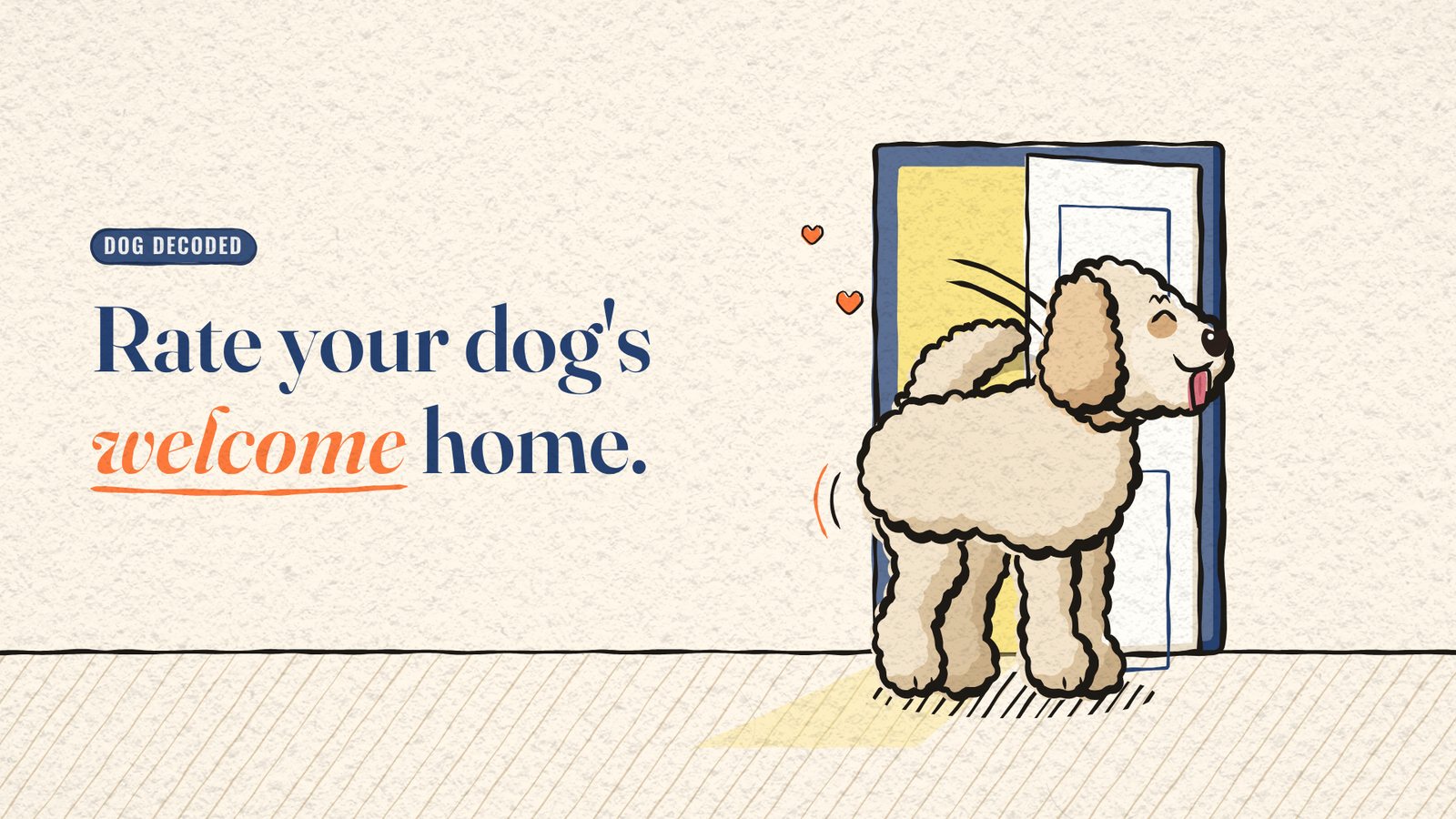
Every welcome home means 'you're back', just at different volumes. The five levels run from a single tail thump to a shoe check, a full-body wiggle, a welcome gift and the zoomies. Bigger is not better: personality decides the volume. Reward calm hellos and watch for sudden changes.
- Five levels: tail thump, shoe check, body wiggle, toy gift, zoomies
- Greeting volume reflects personality and energy, not how much a dog loves you
- Zoomies are usually harmless with space to run; constant indoor zoomies can mean more stimulation is needed
- Belly up often means trust, but read the whole body to rule out submission
Every dog says hello a little differently, but every hello means the same thing: you're back. Some dogs just say it louder. Here is a five-level scale for rating your dog's welcome home, what each level can mean, and when excitement is worth managing.
What does your dog's welcome home say about them?
It says they noticed you were gone and they are glad you are back. The volume tells you about energy and personality, not how much they love you.
A quiet thump from the sofa and a full-body zoomie are both greetings. Think of this scale as a bit of fun with some real behaviour behind it, not a measure of loyalty. It is also not a diagnosis. If your dog's greeting has changed suddenly, that is worth mentioning to your vet.
Want to watch the five levels in 70 seconds?
We turned the scale into a short film, from one lazy tail thump to level five. Watch it, then rate your own dog below.
What are the five levels of a dog's welcome home?
The five levels run from a single tail thump to the zoomies followed by a belly-up roll. Most dogs fall somewhere in the middle, and many do different levels on different days.
| Level | The greeting | What it can mean |
|---|---|---|
| 1 | One thump of the tail, from the sofa | Calm confidence: they were sure you'd come back |
| 2 | The shoe check | They are reading where you have been and who you met |
| 3 | The full-body wiggle | Pure, happy excitement |
| 4 | The welcome gift | Too excited to sit still, so they grab a toy |
| 5 | The zoomies, then belly up | All the waiting coming out at once, then trust |
Level 1: Is one tail thump from the sofa a bad greeting?
No. It often means your dog was sure you would come back. It is the relaxed end of the scale, and it can suit calmer or very secure dogs.
Don't be hurt. A dog who stays put and thumps their tail is not ignoring you. They are saving their energy because nothing about your return is a surprise. Reward it with a calm hello and a stroke.
Level 2: Why does my dog sniff my shoes when I get home?
Your shoes are a newspaper. Dogs read scent, so your shoes tell them where you have been and who you met. This is widely described by trainers and behaviourists, but it is behaviour lore rather than a single study, so take it as the usual explanation.
In Singapore this is extra interesting. A day out through lifts, malls, MRT platforms and wet pavements leaves plenty to read. After rain, wipe your soles at the door, and keep shoes out of reach of puppies who like to chew.
Level 3: What does the full-body wiggle mean?
The tail can't keep up, so the whole back end joins in. It is pure, happy excitement, and it is the classic "you're home!" greeting for many dogs.
Wiggles are usually a good sign. A loose, wiggly body with soft eyes tends to mean friendly excitement. Stiff body, hard stare or fast, stiff tail wagging is a different message, so look at the whole dog rather than only the tail.
Level 4: Why does my dog bring me a toy when I get home?
Many dogs grab a toy when they are too excited to sit still. PetMD says it can be an invitation to play, a way to show off a favourite toy, or a signal that your dog enjoys your company.
PetMD also notes that carrying a toy can help excitable dogs stay calm at greetings, because it is harder to bark and nip when they are focused on carrying something. And yes, it is usually slightly wet.
Level 5: Why does my dog get the zoomies when I come home?
Zoomies are bursts of pent-up energy. The AKC calls them Frenetic Random Activity Periods, explosions of energy that dogs have on occasion, often triggered by excess energy, excitement or relief after a long wait.
That fits a home-alone dog perfectly. Waiting all day, then you walk in, and it all comes out at once. The AKC says zoomies are usually harmless as long as the dog has room to run without hurting themselves, so clear fragile things away. It also says that if they happen constantly indoors, your dog may need more physical and mental stimulation, and that constant zoomies or compulsive behaviours like excessive tail-chasing may need a behaviourist.
What does it mean when my dog rolls belly up?
It often means trust, and sometimes it is just a request for a belly rub. iHeartDogs describes a dog showing its belly as a sign it feels safe when you are around, because exposing the belly goes against the instinct to guard vital organs.
To be careful: the same article says belly-up can also be submission, with signs such as lip licking or a tucked tail. Read the whole body. A loose, wriggly dog who is asking for more is saying "I trust you". A tense dog with a tucked tail needs space and a calm voice, not more patting.
You're the best thing that happened all day. Your dog thinks so, anyway.
Does a bigger welcome mean a happier dog?
Not necessarily. Greeting style is shaped by personality, age, breed, energy and what you have taught them, so a level 1 dog and a level 5 dog can be equally attached.
What matters more is whether the greeting is relaxed and friendly, and whether your dog settles afterwards. If you live in a flat with thin walls, a level 5 greeting every evening is also a neighbour question: you may want to teach a calmer routine at the door so the whole block is not part of the party.
How can I make the welcome home calmer?
If level 5 is a bit much, calm it down gently. Ignore the leaping for a minute, then greet them when all four paws are on the floor. Ask for a sit, reward it, and then say hello properly.
A tiny reward helps, and so does keeping your own arrival low-key. A greeting ritual teaches your dog what to expect.
Rabbit Freeze-Dried Pet Treats (SGD $15.90): Pure rabbit. Nothing else. A classic novel protein, lean and gently digestible.
A tiny piece of single-ingredient rabbit treat is a handy calm-greeting reward. Keep a small jar by the door, ask for a sit, and break the treat into very small pieces so it counts for little in the day's food.
For ways to use up that energy before you walk through the door, try 5 games to tire out your dog indoors.
If your dog struggles when left alone, with pacing, drooling or panic, talk to your vet or a behaviourist. That is different from an enthusiastic hello.
Bottom line
A welcome home is a daily "you're back". Quiet or wild, it is how your dog is built. Rate it for fun, reward the calm moments, and watch for sudden changes.
What level is yours? Tell us on our socials. For more on reading your dog, see where your dog sleeps and what it can mean and 5 ways your dog says "I love you".
Frequently asked questions
Why does my dog get so excited when I come home?
Because they noticed you were gone and are glad you are back. The AKC links zoomies to pent-up energy, excitement and relief after a long wait, so a day alone followed by your arrival can release everything at once. Quiet dogs feel it too, they just show it differently.
Why does my dog bring me a toy when I come home?
PetMD says it can be an invitation to play, a way to show off a favourite toy, or a signal that your dog enjoys your company. Carrying a toy can also help excitable dogs stay calmer at greetings. It is usually slightly wet, too.
Are zoomies normal in dogs?
Yes. The AKC calls them Frenetic Random Activity Periods and says they are usually harmless if the dog has room to run safely. Frequent indoor zoomies can mean your dog needs more physical and mental stimulation. Constant zoomies are worth a chat with your vet or a behaviourist.
Does a dog rolling over mean they trust me?
Often, yes. iHeartDogs describes belly exposure as a sign a dog feels safe with you, because it goes against the instinct to guard vital organs. It can also be submission, shown by lip licking or a tucked tail, so read the whole body.
How do I calm my dog's greeting?
Wait until all four paws are on the floor before you say hello, ask for a sit, and reward it with a tiny treat. Keep your own arrival low-key. If your dog panics when left alone, ask your vet or a behaviourist for help.
Sources
This article is general information, not veterinary advice. If your pet has ongoing symptoms, see your vet.