How to Stop Your Dog Pulling on the Lead: Rate Their Level
By BEANS Team · Published
TL;DR
Dogs pull because pulling works: every tight-lead step gets them there faster. Never yank. Instead, be a tree when the lead goes tight, wait for slack, then reward your dog at your side, with a sniff as the best prize. A harness protects the neck but is not a cure, and a lingering cough needs a vet.
- Dogs pull because following a tight lead rewards them with getting there faster
- Leash jerks and choke, prong or pinch collars are not recommended by AVSAB or RSPCA Australia
- Be a tree, wait for a slack J-shaped lead, then reward at your side
- Letting your dog sniff is a powerful reward for walking nicely
- A harness protects the neck but does not teach loose-lead walking; a lasting cough needs a vet
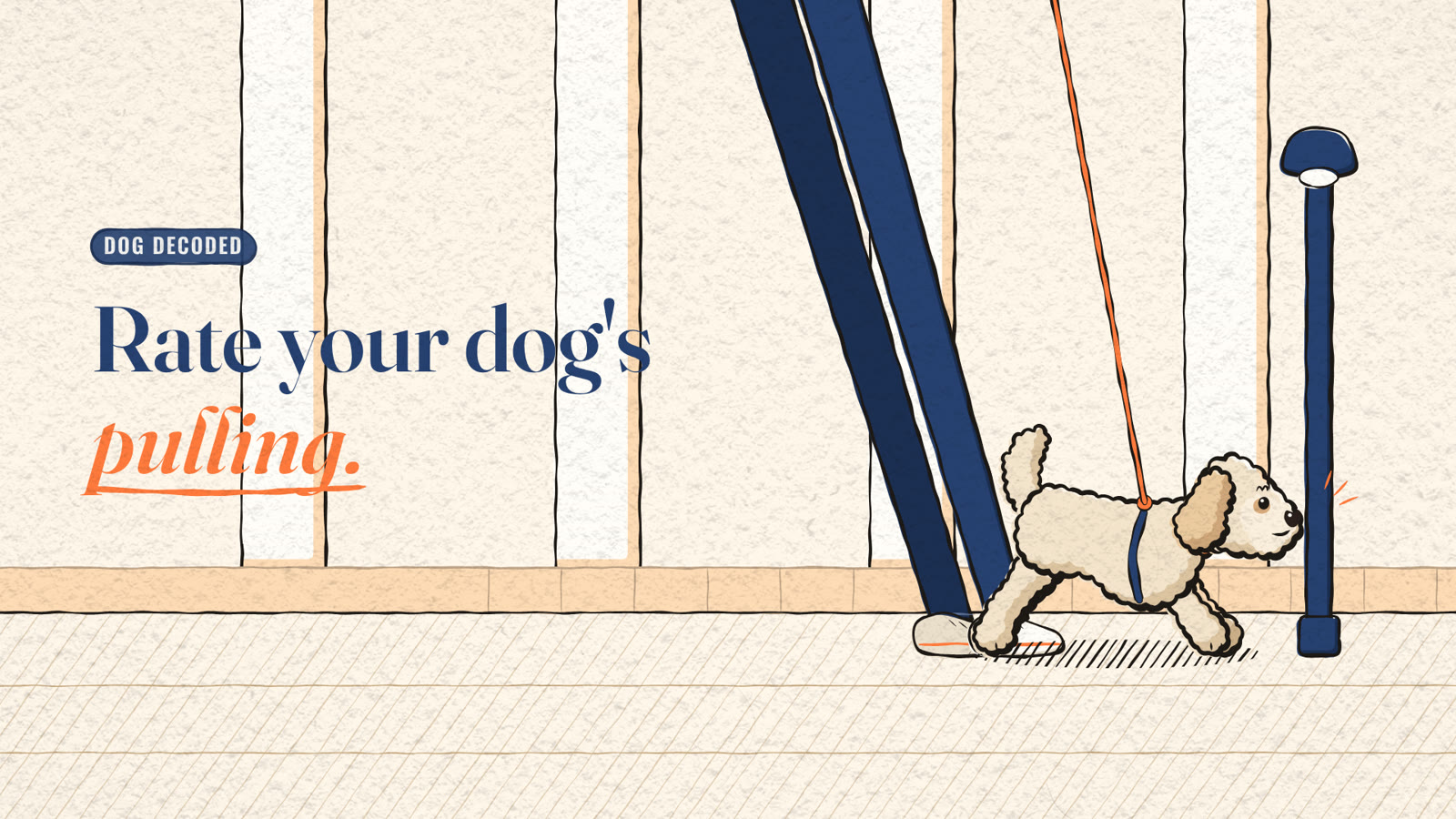
Every dog has a pulling level, from the polite stroller to the full sled dog. Here are five, rated for fun, plus why dogs pull at all and the three-step fix that welfare groups and trainers keep coming back to.
Why does my dog pull on the lead?
Because pulling works. Every time she pulls and you keep walking, she gets where she wanted to go a little faster, so a tight lead starts to mean "go".
The American Kennel Club puts it simply: "Your dog wants to walk", and following her while she pulls "is giving them the very reward they seek." Dogs also naturally walk faster than we do, and there is a whole street of smells to read. None of this makes your dog stubborn or badly behaved. She has learned, very reasonably, that leaning into the harness gets results.
A quick word on what follows. The five levels and their names come from our short film and everyday dog-walking lore, not from a study. The training steps underneath them come from the AKC, RSPCA Australia, RSPCA Queensland, Oregon Humane and the San Francisco SPCA, and we link every one below.
Want to watch the five pulling levels in 89 seconds?
We turned the five levels, the one thing not to do and the three-step fix into a short film with Miya, our Goldendoodle, on a void deck path. Watch it, then pick your dog's number below.
Which pulling level is your dog?
Most dogs sit somewhere around level three, half a body ahead with the lead straight. Pick the row that sounds like your walks, then try the suggestion in the last column.
| Level | What it looks like | What is probably going on | What to try |
|---|---|---|---|
| 1. The stroller | Loose lead, checks back with you | She has learned that walking near you pays | Keep rewarding the check-ins so the habit stays |
| 2. The sniffer | Stops at every bush, lead goes tight then slack | Sniffing, not really pulling | Let her sniff on a loose lead, then cue "let's go" |
| 3. The steady tow | Always half a body ahead, lead straight | Pulling has worked often enough to stick | Be a tree, wait for slack, pay at your side |
| 4. The zig-zagger | Crosses your feet and wraps the lead round your legs | Too much to smell and see at once | Shorter sessions in quieter spots first |
| 5. The sled dog | Chest down, back legs digging, you skiing behind | A long history of pulling paying off | All three steps, every time, plus a front-attach harness |
Level two deserves a defence. A dog who stops to sniff is not the same as a dog who drags you, and the AKC says sniffing is "rewarding and naturally calming for dogs". The goal is a loose lead, not a dog who never gets to read the news.
What should you never do when your dog pulls?
Don't yank her back, and don't let her drag you on. A yank can hurt and frighten her, and letting her tow you teaches her that pulling works.
The American Veterinary Society of Animal Behavior lists "leash jerking" among the physical correction techniques a good trainer should avoid, alongside tools that work through pain, such as choke chains and prong collars. Its position statement says aversive methods "should not be used in canine training", and links them to increased anxiety, fear-related aggression and avoidance. RSPCA Australia goes further on equipment: choke chains, slip collars and prong or pinch collars "must not be used", because they cause pain and distress and can damage the neck.
Pulling back can also backfire for a simpler reason. Oregon Humane notes that trying to force a dog to stay at your side "may provoke an 'opposition reflex'", which is a polite way of saying she leans harder the other way. Our film puts it as "most dogs just pull harder". That is behaviour lore rather than a measured figure, but it matches what most owners see.
The other half of the rule matters just as much. Following her when she pulls, even now and then, keeps the habit alive. The AKC warns that "anytime you allow your dog to pull on the leash, you will set your training back to square one."
How do I stop my dog pulling on the lead?
Make a loose lead the only thing that moves you forward. Stop when it goes tight, walk on when it goes slack, and reward her at your side.
- Be a tree. The second the lead goes tight, stop dead and plant your feet. RSPCA Australia's advice is to "stand still like a tree". Oregon Humane calls a tight lead a red light and a loose lead a green light.
- Wait for slack. Stay put until she eases back or turns to look at you and the lead drops into a J shape. Then walk on. The AKC describes exactly this: a slack lead "hanging in a J-shape" before you continue. The SF SPCA adds that letting even a few steps of pulling happen before you stop muddies the message.
- Pay her at your side. When she is walking with slack in the lead, reward her right by your leg, so the best place to be is next to you. RSPCA Australia suggests a small, tasty treat every few steps, and the AKC says to praise and reward with a treat at your side before you walk on.
The best reward of all: "Go sniff!" The lamp post she was straining towards can become her pay. The AKC gives the example of releasing your dog "to sniff for a few minutes" after she walks a short stretch without pulling. That turns the thing she wanted into the reason to walk nicely.
What to expect: the first few walks can be slow. You might cover one block in the time it used to take to reach the park. Oregon Humane suggests thinking "of a walk in terms of time instead of distance", and says dogs "will get incrementally better, but it won't happen overnight." The SF SPCA suggests practice in short sessions of about ten minutes, two or three times a day, somewhere with few distractions first.
For the rewards, use something tiny and soft enough to eat in one go. RSPCA Queensland suggests treats that are "small and soft", so she isn't busy chewing.
Turkey Freeze-Dried Pet Treats (SGD $13.90): Pure turkey. Nothing else. Lean white meat that's gentle on the stomach and great for training.
Our Turkey Freeze-Dried Pet Treats are 100% turkey and crumble into very small pieces, which suits a reward every few steps. Training treats still count towards her day, so keep extras under about 10% of daily calories and trim her dinner on big training days. Our guide to how many treats a dog should have shows how.
Will a harness stop my dog pulling?
Not on its own. A harness takes the pressure off her neck, and a front-attach one can make pulling less effective, but she still needs the three steps to learn that a loose lead is what works.
RSPCA Australia calls a harness "ideal for walking and training your dog" because it helps protect the neck from pulling. For dogs who keep pulling, it suggests a front-attach harness, used with a double-ended lead, as "a gentle training aid", ideally fitted with help from a reward-based trainer. RSPCA Queensland recommends the same set-up. Oregon Humane says front-attach harnesses "help redirect your dog back to you".
A few kit notes from the same sources:
- Fit matters. Gear should be in good condition and fit comfortably. Check puppies often, as they outgrow it fast.
- Skip retractable and bungee leads. RSPCA Australia says they reduce control and raise the risk of injury and tangles. The SF SPCA warns that a Flexi-style lead "actually gives to a pulling dog and teaches them to pull."
- Head collars are a judgement call. The SF SPCA recommends one, while RSPCA Australia and RSPCA Queensland advise caution, as a poor fit can cause injury. If a trainer suggests one, ask them to fit it and show you how to use it.
Is my dog's cough on walks normal, or worth a vet check?
A cough or gag while she pulls on a collar is common, and a harness often helps. A cough that keeps coming back, or shows up away from the lead too, is worth a vet check.
The PDSA lists pulling on the lead as a common cause of coughing that "can often be fixed by using a harness instead of a collar". It also lists many other causes, from kennel cough to heart disease and a collapsing windpipe. The Merck Veterinary Manual says tracheal collapse is "most common in toy and miniature breeds" and describes "a dry, honking, chronic cough".
We can't tell you which one your dog has, and nor can a blog post. The PDSA's guide is a sensible one:
- Book a vet visit if she has been coughing regularly for more than a few days, or seems unwell with it.
- Contact your vet straight away if she is struggling to breathe, has pale gums, or is breathing very loudly or quickly.
How do I practise loose-lead walking in Singapore?
Start somewhere quiet at a cool time of day, keep sessions short, and build up to busier routes. A calm, fresh dog learns faster than a hot, over-excited one.
- Pick the hour. Midday pavements and humid afternoons are hard on dogs. Early morning or after sunset makes slow training walks kinder, and on hazy days check our haze guide before heading out.
- Start small. An HDB void deck early in the morning or a quiet corridor is plenty for the first sessions. Save park connectors, with their joggers, cyclists and other dogs, for later.
- Take the edge off first. Oregon Humane suggests some exercise before training. On a wet or hot day, our indoor games can do that job.
- Budget for sniff breaks. A few minutes of "go sniff" at every planter is a reward, not a failure.
Bottom line
Dogs pull because pulling works, so make it stop working. Be a tree when the lead goes tight, wait for slack, pay her at your side, and use "go sniff" as the biggest prize. Never yank, skip pain-based tools, and see your vet about a cough that sticks around.
Stock the treat pouch for tonight's walk with our best-selling single-ingredient treats.
Frequently asked questions
Why does my dog pull on the lead?
Because it works. Each time she pulls and you keep walking, she reaches the smell, dog or park faster, so a tight lead comes to mean go. Dogs also naturally walk faster than people. It is learned behaviour, not stubbornness, which is good news, because it can be unlearned with patience.
What is the be a tree method?
The moment the lead goes tight, you stop and stand still. When your dog eases back and the lead goes slack, you walk on, and you reward her at your side. RSPCA Australia describes it as standing still like a tree, so your dog learns that pulling never moves her forward.
Should I jerk the lead to correct pulling?
No. The American Veterinary Society of Animal Behavior lists leash jerking among physical corrections trainers should avoid, and links aversive methods to fear and anxiety. A yank can hurt and frighten your dog, and many dogs simply lean harder. Stop, wait for slack and reward the loose lead instead.
Does a harness stop a dog from pulling?
Not by itself. A harness takes pressure off the neck, and RSPCA Australia suggests a front-attach harness with a double-ended lead as a gentle training aid for persistent pullers. Your dog still needs to learn, through stopping, waiting for slack and rewards, that a loose lead is what moves the walk forward.
Why does my dog cough when pulling on the lead?
Collar pressure on the throat is a common reason, and the PDSA says switching to a harness often helps. Coughs have many other causes, though, including kennel cough and heart or airway problems. See your vet if coughing lasts more than a few days, and urgently if your dog struggles to breathe.
Sources
- American Kennel Club: How to stop your dog from pulling on the leash
- American Kennel Club: How to stop leash tugging and biting when walking
- RSPCA Australia Knowledge Base: What equipment should I use when teaching my dog or puppy to walk on a leash?
- RSPCA Queensland: How to stop your dog pulling the lead
- Oregon Humane Society: The secrets of loose-leash walking
- San Francisco SPCA: Loose-leash walking
- American Veterinary Society of Animal Behavior: Position statement on humane dog training (2021, PDF)
- PDSA Pet Health Hub: Coughing in dogs
- Merck Veterinary Manual (dog owners): Tracheal collapse in dogs
This article is general information, not veterinary advice. If your pet has ongoing symptoms, see your vet.