Halloween Sweets That Are Dangerous for Dogs (and What to Do)
By BEANS Team · Published
TL;DR
Four Halloween sweets are dangerous for dogs: chocolate (darker is worse), raisins and grapes (kidney damage in some dogs, no safe amount), sugar-free sweets with xylitol (fast blood sugar drop) and wrappers (gut blockage). If she eats any, call your vet now, keep the wrapper and never make her sick at home.
- Darker chocolate, baking chocolate and cocoa powder carry the most theobromine, which dogs clear very slowly
- Raisins and grapes can cause kidney failure in some dogs, nobody can predict which, and no safe amount is known
- Xylitol in sugar-free sweets and gum can drop a dog's blood sugar within 30 to 60 minutes
- Foil and plastic wrappers can lodge in the gut and may need surgery
- If she eats something, call your vet before signs appear, bring the wrapper and never induce vomiting at home
Halloween falls on Saturday 31 October this year, and the sweet bowls are coming out. Four things in that bowl are a real danger to dogs: chocolate, raisins (and grapes), sugar-free sweets and gum, and the wrappers. Here is why each one matters, what to do if your dog gets one, and how to keep the evening fun.
Which Halloween sweets are dangerous for dogs?
Chocolate, raisins and grapes, anything sugar-free that may contain xylitol, and the foil and plastic wrappers. Even sweets that are not toxic can upset a dog's stomach, so the safest bowl is one she can't reach.
| Hazard | What's the problem | Signs can show | What to do |
|---|---|---|---|
| Chocolate | Theobromine and caffeine, which dogs clear very slowly | Usually within 6 to 12 hours | Call your vet; note the type and how much |
| Raisins and grapes | Kidney damage in some dogs, with no known safe amount | Vomiting within 6 to 12 hours; kidney failure in 24 to 72 hours | Call your vet straight away, even if she seems fine |
| Sugar-free sweets and gum | Xylitol can cause a fast drop in blood sugar and, in larger amounts, liver damage | Can start within 30 to 60 minutes | Call your vet now; keep the packet |
| Wrappers, foil, plastic | Can lodge in the throat or gut, sometimes needing surgery | Varies; may not be obvious at first | Call your vet; don't wait for it to pass |
A quick word on what follows. The film is the friendly version, so it keeps things simple. This post is the careful version, with the numbers vets use, the parts the research is still unsure about, and links to every source at the end. None of it replaces your own vet, who knows your dog.
Want to watch the four sweets in 75 seconds?
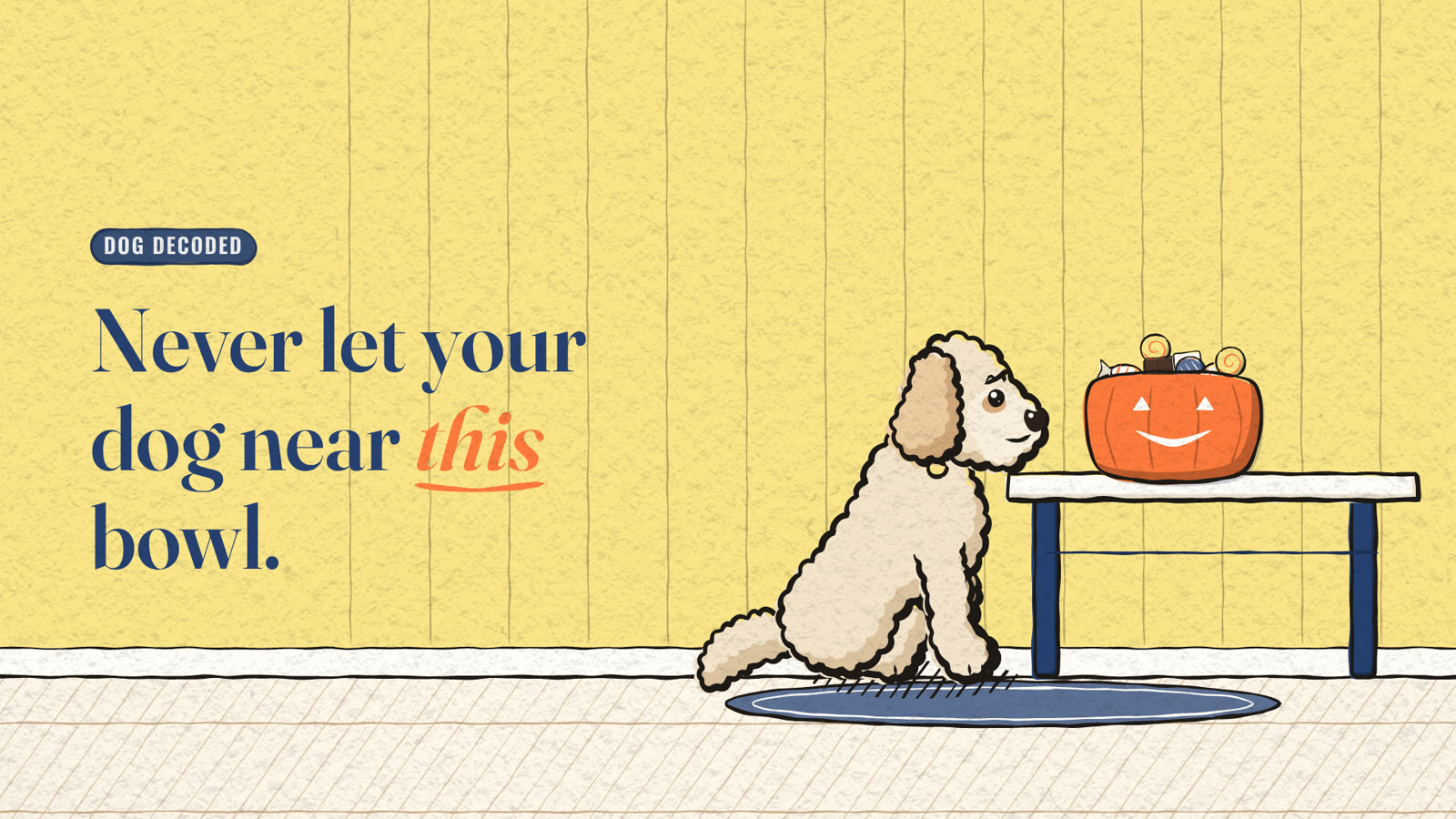
We turned the Halloween bowl into a short film with Miya, our Goldendoodle, nudging a pumpkin sweet bowl closer to the edge of the coffee table, one nose press at a time.
Why is chocolate dangerous for dogs?
Chocolate contains theobromine and caffeine, and dogs break theobromine down very slowly. The darker and more bitter the chocolate, the more of it there is, so baking chocolate and cocoa powder are the most dangerous.
The Merck Veterinary Manual gives the half-life of theobromine in dogs as 17.5 hours, which is why it lingers in the body. It lists cocoa powder as the richest source, followed by unsweetened baking chocolate, with dark chocolate next and milk chocolate well behind. The ASPCA agrees that "white chocolate has the lowest methylxanthine content", but lower is not zero, and the fat and sugar in any chocolate can still upset her stomach.
Merck says signs usually appear within 6 to 12 hours. They include vomiting, diarrhoea, thirst, restlessness, a racing heart and, with larger amounts, tremors and seizures. It also notes that the high fat content of chocolate "may trigger pancreatitis in susceptible animals."
The careful part: Merck gives rough doses at which signs start, but it also says individual dogs vary and severe signs can occur at lower doses. A small square of milk chocolate in a big dog is a different call from a bar of dark chocolate in a small one, and only your vet can make it. So don't do the maths at home and decide to wait. Ring, tell them her weight, the type and the amount, and let them decide.
Are raisins and grapes really that bad?
Yes, for some dogs. Grapes and raisins have been linked to kidney failure in some dogs, nobody can predict which ones, and there is no known safe amount. Treat any raisin, grape, sultana or currant as a reason to call your vet.
Raisins turn up at Halloween as chocolate-covered raisins and little snack boxes; the AKC notes they are often handed out as a treat alternative.
What the research says, and doesn't. Merck says grape and raisin exposure "has been associated with development of renal failure in some dogs". The ASPCA says tartaric acid "is speculated to be the toxic component", and Merck calls it "one proposed toxic principle". So the cause is still a hypothesis, not a settled fact. Merck adds that tartaric acid content varies, which may help explain why effects differ from one case to the next. Until it is settled, the safe rule is none at all.
Timing matters here. Merck says most affected dogs vomit or have diarrhoea within 6 to 12 hours, and kidney failure develops within 24 to 72 hours. A dog who seems perfectly well the morning after is not in the clear, and Merck's advice for a dog who still looks well is prompt decontamination and fluids by the vet, not waiting to see.
Why are sugar-free sweets and gum so risky?
Many sugar-free sweets, mints and chewing gums contain xylitol, a sweetener that is safe for people but can make a dog's blood sugar drop fast. Larger amounts can damage the liver.
Cornell's Riney Canine Health Center says low blood sugar can develop within 30 to 60 minutes of eating xylitol, with signs such as weakness, stumbling, trembling, vomiting and, in severe cases, seizures. The ASPCA says it can cause low blood sugar and "potentially liver damage depending on the amount ingested."
The careful part: Cornell gives no single toxic dose, because the amount of xylitol varies hugely between products. One piece of gum is not the same as a pack. That is exactly why the label matters. Xylitol is also found in some peanut butters, toothpastes and baked goods, as the AKC and Cornell both note, so a party table of sugar-free bakes deserves the same caution.
Check every label before anything sugar-free goes into the bowl, and keep handbags with gum in them off the floor.
Can a sweet wrapper hurt my dog?
Yes. Foil and plastic wrappers can get stuck in a dog's throat or gut, and the AKC says that can mean surgery to remove them. A dog who eats a whole sweet, wrapper and all, has two problems, not one.
VCA puts it simply: "wrappers and foil can get stuck in your pet's gut." A pile of empty wrappers on the rug may be the only clue. Not every swallowed wrapper causes trouble, but you can't tell from the outside, so call your vet rather than waiting for it to pass. If you are asked to watch her toilet habits for the next few days, our dog poop chart can help you describe what you see to your vet.
What should I do if my dog ate Halloween sweets?
Call your vet now, before any signs appear. Tell them what she ate and how much, keep the wrapper, and don't try to make her sick yourself unless the vet tells you to.
- Don't wait for signs. Dr Tina Wismer of the ASPCA Animal Poison Control Center, quoted by the University of Illinois College of Veterinary Medicine, says "Don't wait", and that "symptoms can be delayed hours or even days."
- Gather the facts. What she ate, roughly how much, and when. The AKC says the type of sweet, its ingredients and the amount help guide treatment. Illinois suggests bringing the label or wrapper.
- Never make her sick at home. Illinois says plainly: "Never try to induce vomiting in your pet at home." Whether and how to do it is a vet's decision, using medicines made for the job.
- Out of hours? Call a 24-hour emergency vet. It is worth looking up the nearest one before Saturday, so you are not searching while she is ill. The poison hotlines on the ASPCA and AKC pages are American services, so in Singapore your own vet or an emergency clinic is the first call.
And if the evidence suggests she has been helping herself, please don't scold her. That "guilty" look is not what it seems, as we explain in why dogs look guilty. Being calm gets her to the vet faster.
How do I keep my dog safe at a Halloween party?
Put the bowl up high, keep the bin lid shut, and give her a quiet space away from the door. Most accidents happen because a bowl is at nose height or a guest drops something.
Whether you are hosting a costume party at home or the condo is running trick-or-treat, a few habits help:
- Bowl up high. Coffee tables and low shelves are exactly nose height. Use a high shelf or a closed cupboard.
- Bin lid shut. The AKC suggests collecting discarded wrappers promptly. Kids' goody bags count too.
- Brief your guests. Ask them not to share sweets and to keep bags and coats off the floor. If your dog is a skilled table beggar, our begging moves guide covers how to stop it paying off.
- A calm room. The AKC notes that constant doorbells, costumes and big gatherings can be stressful for dogs, and that you should keep her securely managed when answering the door.
- Decorations. The AKC warns that candles can burn a curious nose or wagging tail, and that batteries and small parts from decorations are a risk if chewed.
- Costumes. If she wears one, the AKC says it should not cover her face, restrict movement or have parts she can chew off, and she should never be left alone in it.
What can my dog have instead?
Give her a treat of her own, so she isn't left out. A single-ingredient treat is an easy swap because there is nothing hidden in it, no sweetener, no chocolate and no wrapper.
Turkey Freeze-Dried Pet Treats (SGD $13.90): Pure turkey. Nothing else. Lean white meat that's gentle on the stomach and great for training.
Our Turkey Freeze-Dried Pet Treats are 100% turkey, nothing else, and small enough to hand out to a dog who is behaving beautifully at the door. Keep them to a sensible share of her day, as we explain in how many treats a dog should have, especially on a night when everyone wants to give her something.
Bottom line
Chocolate, raisins and grapes, sugar-free sweets with xylitol, and the wrappers are the four Halloween dangers. Keep the bowl high and the bin shut, check every label, and if she gets into something, call your vet straight away with the wrapper in hand. Don't wait for signs and don't make her sick yourself.
For a safe treat she can enjoy while the trick-or-treaters come and go, try our Turkey Freeze-Dried Pet Treats.
Frequently asked questions
How much chocolate is dangerous for a dog?
It depends on the type of chocolate, how much she ate and her weight. Cocoa powder and baking chocolate are the most dangerous, then dark, then milk. Dogs vary and severe signs can occur at lower doses than expected, so call your vet with her weight, the type and the amount rather than guessing.
My dog ate a raisin but seems fine. Should I still call the vet?
Yes. Grapes and raisins cause kidney failure in some dogs, there is no known safe amount, and kidney problems can develop 24 to 72 hours later. A dog who looks fine at first may not be. Treatment works best when it starts early, so call your vet straight away.
Is xylitol dangerous to dogs in small amounts?
It can be. Xylitol can cause a fast drop in blood sugar, sometimes within 30 to 60 minutes, and larger amounts can damage the liver. Products vary a lot in how much they contain, so keep the packet and call your vet now. It is found in sugar-free gum, sweets, some peanut butters and toothpastes.
Should I make my dog throw up if she ate chocolate?
No, not at home. The University of Illinois College of Veterinary Medicine says never try to induce vomiting in your pet yourself. Whether making her sick is safe and useful is a vet's decision, made with medicines intended for it. Call your vet, tell them what she ate and how much, and follow their advice.
What Halloween treat can I safely give my dog?
Skip the sweet bowl entirely and give her a treat made for dogs. A single-ingredient treat, such as plain freeze-dried meat, has no chocolate, sweetener or wrapper. Keep portions small, as treats should only be a small part of her daily food, and ask guests not to share their sweets with her.
Sources
- Merck Veterinary Manual: Chocolate toxicosis in animals
- Merck Veterinary Manual: Grape, raisin and tamarind toxicosis in dogs
- ASPCA: People foods to avoid feeding your pets
- Cornell Riney Canine Health Center: Xylitol toxicities
- VCA Animal Hospitals: Even non-chocolate Halloween candy can be toxic to pets
- AKC: Halloween safety tips for dog owners
- University of Illinois College of Veterinary Medicine: What to do when your pet gets into household toxins
This article is general information, not veterinary advice. If your pet has ongoing symptoms, see your vet.